M1502E-111 for Compact and Medium-Load Mobile Robot Chassis
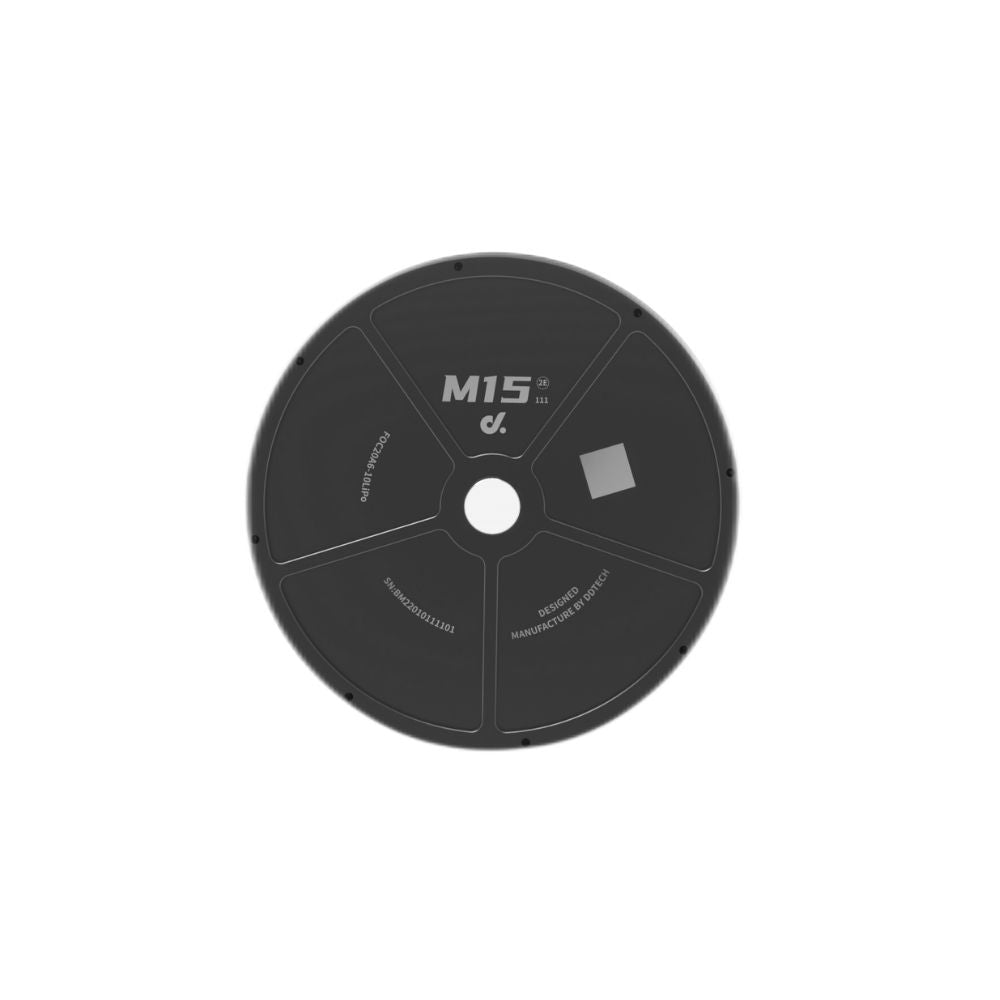
M1502E-111 for Compact and Medium-Load Mobile Robot Chassis is designed for mobile platforms that need stable motion, compact dimensions, and repeatable positioning. Modern AMRs often operate 16–24 hours per day, and fleet operators expect thousands of travel cycles before scheduled maintenance. A compact drive solution with consistent torque output helps reduce installation space, improves battery use, and supports reliable movement in warehouses, hospitals, laboratories, and manufacturing facilities where navigation accuracy is measured in millimeters rather than centimeters.
Mobile robot adoption has continued to grow across logistics, healthcare, and manufacturing since 2020, with many facilities expanding automation to address labor shortages and higher order volumes. Compact chassis have become more common because they can move through aisles narrower than 1.2 meters, enter elevators, and work safely around people. That trend has increased demand for smaller drive systems that fit limited installation space while maintaining stable motion throughout long operating hours.
Engineers often evaluate a drive unit by looking at continuous operation, installation size, positioning repeatability, maintenance intervals, and compatibility with different control systems instead of maximum speed alone.
The Direct Drive M1502E-111 is intended for this type of application. Its compact structure leaves more room inside the chassis for batteries, controllers, laser scanners, cameras, and communication hardware. Many medium-load robots allocate 30–45% of internal volume to energy storage, so reducing drivetrain size gives designers more flexibility without increasing the external dimensions of the vehicle.
Another consideration is motion consistency during repeated acceleration and stopping. A warehouse robot may perform 5,000–20,000 start-stop movements every week depending on its operating schedule. Smooth torque delivery helps reduce wheel slip during low-speed positioning and allows navigation software to maintain more accurate path tracking. Stable mechanical output also improves docking performance when robots connect with charging stations or automated work cells.
| Typical chassis requirement | Benefit of a compact drive module |
|---|---|
| Limited installation space | More room for batteries and sensors |
| Frequent direction changes | Smoother motion and lower vibration |
| Long daily operating hours | Reduced mechanical wear |
| Medium payload transport | Stable traction across different floor types |
Power consumption is another area that receives attention during chassis design. Battery capacity is fixed by available installation space, so every improvement in drivetrain efficiency helps extend operating time. Many autonomous mobile robots work for 8–12 hours between charging sessions, while larger fleet systems schedule automatic charging when battery capacity reaches approximately 20–30%. Efficient mechanical transmission helps maintain productive operating time without increasing battery size.
Consistent energy use also makes fleet scheduling easier because robots complete similar travel distances before returning to charging stations.
Maintenance planning becomes more predictable when moving components operate under stable mechanical conditions. Industrial facilities commonly schedule preventive maintenance after a defined number of operating hours rather than waiting for unexpected failures. In many automated distribution centers, robots accumulate more than 3,000 operating hours per year, making component durability an important part of long-term equipment planning.
Integration is also simpler when a drive module supports standard mechanical and electrical interfaces. Robot manufacturers frequently build several chassis using the same platform architecture while changing payload capacity or sensor configuration. Using one drive solution across multiple models reduces engineering work, simplifies spare-parts management, and shortens production preparation for future product updates.
The M1502E-111 can be used in warehouse transport robots, hospital delivery vehicles, inspection platforms, laboratory automation systems, hotel service robots, and indoor material handling equipment. These environments often include polished concrete, epoxy-coated floors, ceramic tiles, or industrial vinyl surfaces. Stable wheel control helps maintain predictable movement across different floor materials while supporting accurate navigation over thousands of repeated routes.
Manufacturers also evaluate components based on available technical documentation, installation support, and replacement availability throughout the equipment lifecycle. Product information for the Direct Drive M1502E-111 provides specifications that help engineers compare installation dimensions, mechanical compatibility, and application suitability before integrating the drive module into a new robot chassis.
As mobile automation continues expanding across commercial and industrial environments, compact drive modules remain an important part of chassis development. A well-matched drive system supports stable movement, efficient use of available space, repeatable positioning, and dependable daily operation while allowing manufacturers to build robots that meet different payload and application requirements without increasing overall chassis size.