What Are the Most Common Types of Industrial Hose and Their Uses?
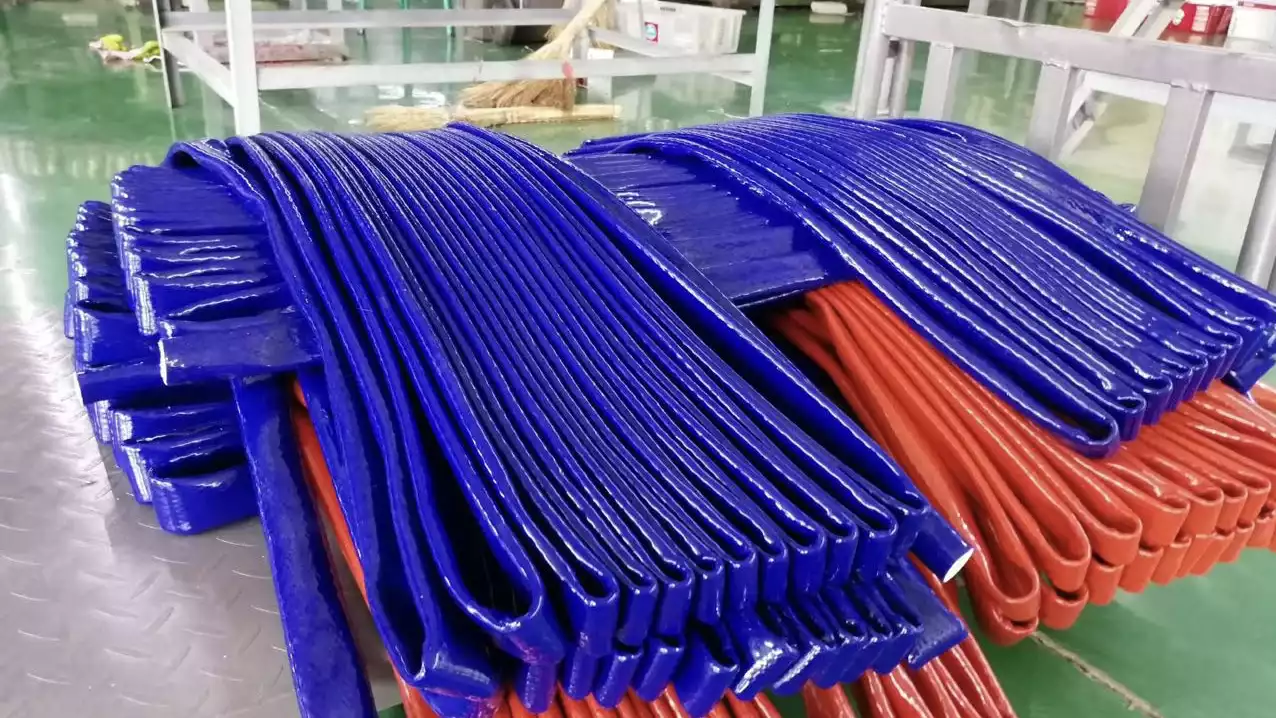
Industrial hoses are built around the material they carry, the pressure they face, and the temperature around them. Air and water hoses cover routine plant service, while petroleum, chemical, steam, hydraulic, food, suction, and material-handling hoses use different tube compounds and reinforcement. A steam hose may handle 232°C and 250 psi, while a PTFE hose can be rated to 2,500 psi in some constructions. No hose type is suitable for every fluid. A useful specification compares media compatibility, working pressure, vacuum rating, bend radius, temperature, coupling type, and external abrasion before size or price is considered.
Most industrial hoses use three functional layers: an inner tube that touches the media, reinforcement that controls pressure and shape, and an outer cover that deals with abrasion, weather, oil, or heat. Reinforcement may be textile braid, steel-wire braid, spiral wire, or a rigid helix. A 2026 buyer comparing two hoses with the same 1-inch inside diameter can still find large differences in pressure rating, bend radius, vacuum capability, and temperature range because construction changes the job the hose can safely perform.
Air hose sits at the simpler end of the range. It supplies compressors, impact tools, pneumatic cylinders, spray equipment, and assembly machinery. Multipurpose versions may also carry water or limited quantities of oil, depending on the tube compound. A plant running at 100–150 psi still needs margin for pressure spikes, coupling losses, heat near compressors, and repeated dragging across concrete. NBR is often used where oil mist is present, while EPDM is more common where weather and water resistance matter.
Water hose follows the same general construction but covers a broader range of transfer work, from washdown and cooling to construction pumping and tank filling. The important distinction is suction versus discharge. A discharge hose is supported by internal pressure; a suction hose can experience close to 100% vacuum relative to atmospheric pressure and needs reinforcement that prevents the wall from collapsing. Wire helixes or rigid polymer spirals are common where pumps pull water, wastewater, or light slurry from tanks and pits.
Petroleum hose changes the material requirement because gasoline, diesel, lubricants, and blended fuels can swell or weaken compounds that work well with water. Nitrile-based tubes are widely used because they resist petroleum oils better than many general-purpose rubbers. Fuel composition still matters: ethanol-containing gasoline and biodiesel blends introduced widely after the 2000s can behave differently from conventional fuels. Tank-truck and terminal applications may also require electrically conductive hose construction to control static accumulation during transfer.
Chemical hose takes compatibility further. The name of a chemical alone is not enough for selection; concentration, temperature, exposure time, and mixtures matter. EPDM may work with many acids and alkalis, while XLPE, UHMWPE, or PTFE may be chosen for more aggressive service. Parker lists a conductive PTFE hose meeting SAE 100R14B with a temperature range from -73°C to 232°C and a maximum operating pressure of 2,500 psi in the specified -6 size.
A hose that handles a chemical at 20°C should not automatically be assumed suitable for the same chemical at 80°C. Higher temperature can increase permeation, soften some polymers, and shorten service life.
Steam hose has a narrower job but much harsher operating conditions. Saturated and superheated steam combines temperature, pressure, condensate, and repeated heating cycles. Gates lists Plant Master steam hose for service up to 232°C or 450°F at 250 psi, with a 10:1 design factor and sizes from 3/8 inch through 2 inches. Its construction uses EPDM tube material and braided steel-wire reinforcement.
Diameter also changes how the same steam-hose family behaves. Gates lists a 3/8-inch version with a 4-inch minimum bend radius, while a 2-inch version requires a 25-inch minimum bend radius. Both are listed with a 2,500 psi minimum burst pressure, but the larger hose needs far more space to bend without stressing the carcass.
High-temperature installations often expose nearby hydraulic, fuel, or coolant hoses to radiant heat even when the fluid inside them is much cooler. A high temperature fire sleeve can be installed over compatible hose assemblies where extra external heat and splash protection is required. Sleeve selection should consider hose outside diameter, continuous surface temperature, short-duration exposure, clearance, fittings, and whether the sleeve will trap contamination or interfere with inspection. A sleeve does not increase the hose manufacturer's pressure rating.
Hydraulic hose is usually selected for much higher pressure than general air or water hose. It connects pumps, control valves, cylinders, motors, and accumulators on construction equipment, agricultural machines, manufacturing lines, and mobile systems. Depending on construction, hydraulic hoses may use one or two wire braids or multiple spiral-wire layers. SAE 100R-series specifications have been used for decades, although current equipment specifications may also reference ISO standards and manufacturer-specific performance classes.
The pressure number should be read together with temperature and impulse life rather than treated as a standalone figure. A 4:1 design factor, for example, describes a relationship between working and minimum burst pressure; it does not give permission to operate near burst pressure. Parker's 919 PTFE hose is listed with a 4:1 design factor in addition to its 2,500 psi maximum operating pressure. Routing also matters because twisting, tight bends, and side loading at fittings can shorten assembly life.
Material-handling hose deals with a different failure mode: wear from sand, cement, grain, pellets, mineral slurry, shot-blast media, and other solids. Rubber compounds and polyurethane are common because the tube has to tolerate repeated particle impact. In pneumatic conveying, particle velocity can rise sharply as line diameter decreases; even a 20% reduction in bore area can increase local velocity enough to concentrate wear at bends, reducers, and hose ends. Heavy abrasive service therefore favors thicker tubes and smoother routing.
Food and beverage hose adds hygiene and cleanability requirements. Common duties include milk, beer, wine, juice, edible oils, potable water, and liquid ingredients. Materials may include EPDM, nitrile, silicone, PVC, or fluoropolymers, but food-contact approval must match the intended market and product. In the United States, food-contact rubber articles are addressed under 21 CFR requirements, and manufacturers may publish separate compliance statements for individual hose families rather than claiming that every hose made from the same polymer is food grade.
Cleaning conditions can be more severe than the product being transferred. A dairy hose may spend most of the day around 4–20°C product temperatures but encounter much hotter cleaning cycles. Alcohol content, fat concentration, caustic cleaner strength, sanitizing chemistry, and cleaning temperature all affect material choice. A hose rated for drinking water should therefore not be substituted automatically for edible oil, alcohol, or hot clean-in-place service.
| Hose family | Typical media | Common pressure or temperature concern | Construction feature often used |
|---|---|---|---|
| Air | Compressed air | 100–300 psi service ranges are common across products | Textile or wire reinforcement |
| Water | Water, wastewater | Positive pressure or vacuum | Spiral or helix for suction |
| Petroleum | Gasoline, diesel, oils | Fuel compatibility and static | NBR tube, conductive options |
| Chemical | Acids, alkalis, solvents | Concentration and temperature | EPDM, XLPE, UHMWPE, PTFE |
| Steam | Saturated/superheated steam | Up to 232°C in some industrial products | EPDM and steel-wire braid |
| Hydraulic | Hydraulic oils | Hundreds to thousands of psi | Wire braid or spiral wire |
| Material handling | Powders, pellets, slurry | Internal abrasion | Thick rubber or polyurethane |
| Food | Beverages and ingredients | Cleaning temperature and sanitation | Food-contact tube materials |
Vacuum and ducting hoses sit outside the usual high-pressure comparison. Vacuum hose must resist inward collapse, while ducting usually moves air, fumes, dust, chips, or light particles at relatively low pressure. Polyurethane ducting is often selected for abrasive dust, PVC for general ventilation, and silicone-coated or fabric-reinforced constructions for hot-air service. A 6-inch duct may have very different wall thickness and bend behavior from a 2-inch suction hose even when both are described as flexible transfer products.
External conditions can eliminate an otherwise suitable hose. Outdoor service adds UV, ozone, rain, and temperature cycling; a refinery or workshop may add oil splash; foundries and engine compartments add radiant heat; mining and construction add severe cover abrasion. A hose installed in 2026 should therefore be checked against the actual routing path, not only a fluid compatibility chart. Clamp positions, moving joints, sharp edges, floor contact, and proximity to hot equipment affect wear between scheduled inspections.
Couplings complete the assembly. Steam fittings, cam-and-groove connections, hydraulic crimp fittings, sanitary ends, flanges, and threaded fittings are designed for different pressure classes and hose constructions. Gates, for example, specifies particular coupling recommendations for its steam-hose range rather than treating fittings as universal hardware.
Inspection intervals should reflect severity of use rather than a single calendar number. A stationary water-transfer hose that moves clean water at 50 psi does not age like a steam assembly cycling near 232°C or a material hose carrying abrasive solids every shift. Inspection should include the cover, exposed reinforcement, blistering, flattened areas, cuts, leakage, coupling movement, corrosion, kinks, and local stiffness. Assemblies removed after abnormal heat, severe crushing, or coupling damage should be evaluated against the manufacturer's replacement criteria before returning to service.